Monday, 10 September 2018

Date with a dipper

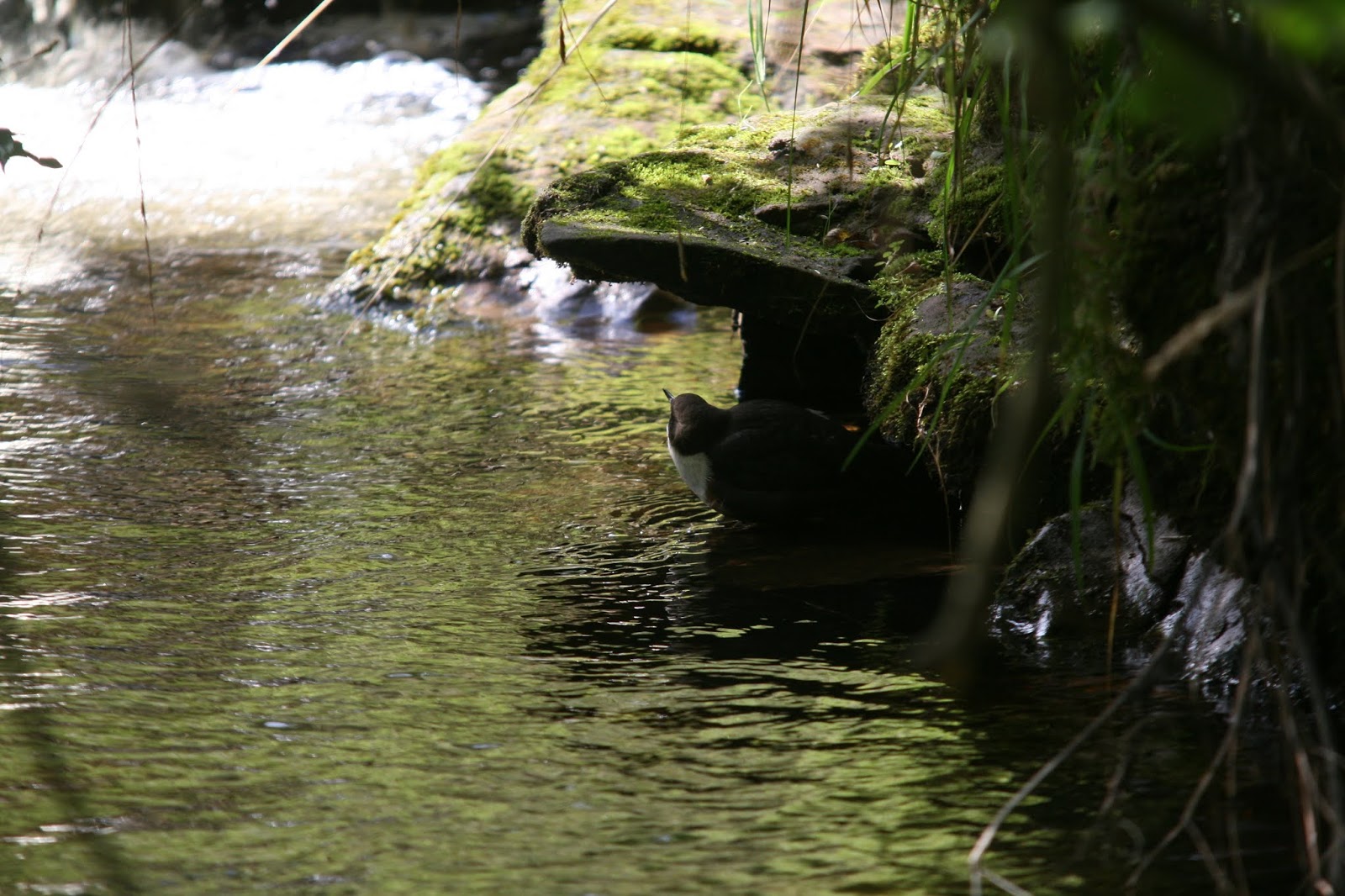
After ID'ing my moths and placing the camera trap yesterday, I was out with a cuppa on the garden bridge. As I moved to the upstream side a dipper zipped from beneath me to the bottom of the waterfall. 

Usually, the dippers near the house vanish as soon as they're disturbed, but this one hung around as I finished my tea and went to get my camera. Remaining as I happily snapped away and allowing both Jack and Chrissy to wander over to me, watch and leave again without obvious concern. 

I got some great images (some of which I might try to do something special with), but for now, here are some of the middling ones... 


Sunday, 9 September 2018

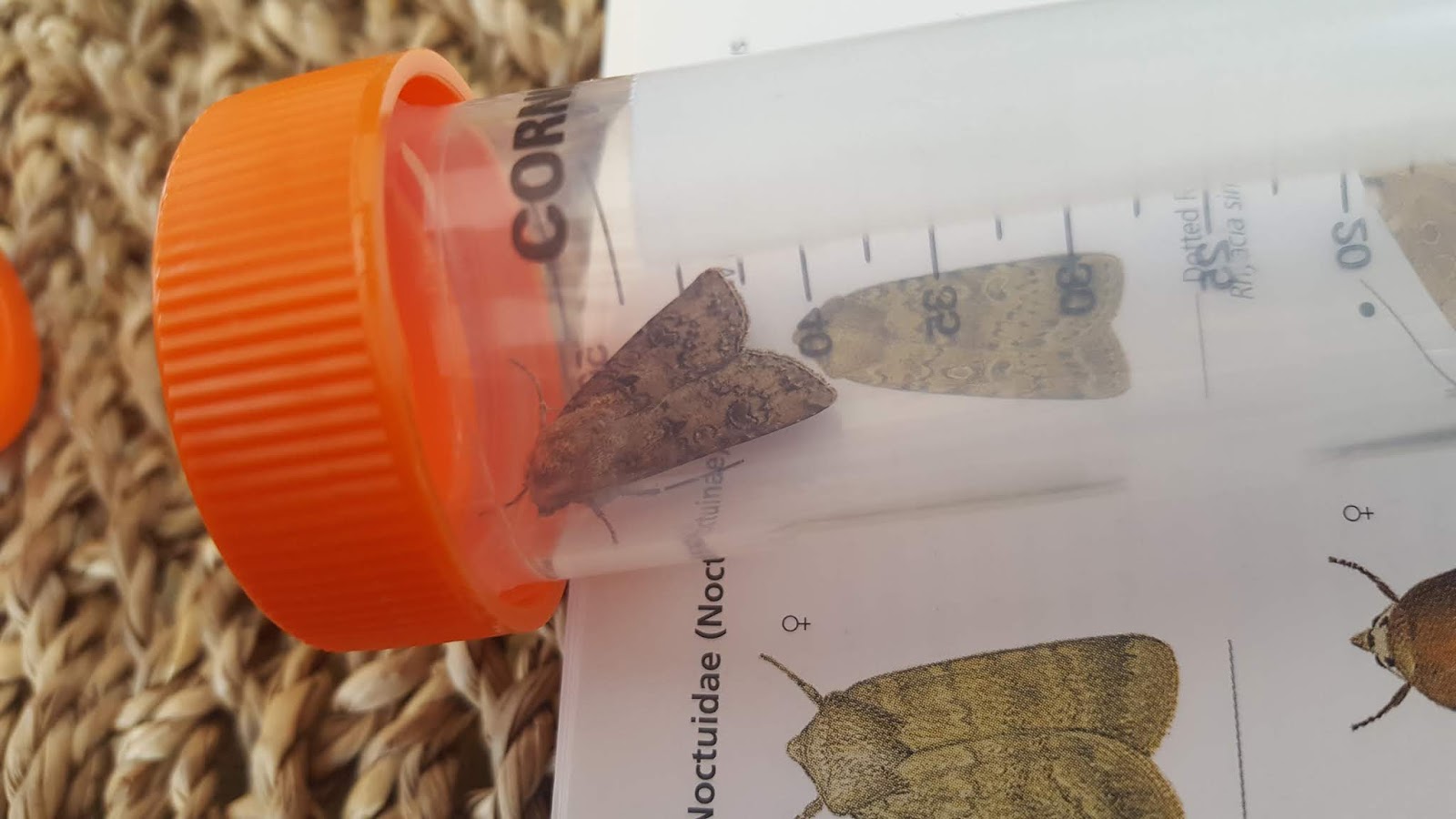
Sooooo I bought a moth trap - Kirkconnel moths 08/09/2018

On Friday I returned from a field trip to Harris (more on that another day) to find two new toys waiting for me. A shiny new trail cam, and Skinner trap from NHBS. I've been looking forward to getting the trap since moving house, so, with a warm evening, only ten per cent chance of rain at between 2 and 3 am and a relatively low wind, I deployed the trap in the back garden. 

I woke at 6 to cover the trap, then waited until the godson was up and about to open it up and identify the contents. NB: with a three-year-old "helping" I.D took about 2 hours...

On the night of the 8th of Sept we bagged:

1 canary shouldered thorn
5 large yellow underwing
1 common marbled carpet
1 silver Y
1 spruce carpet
1 autumnal rustic
2 centre barred sallow
1 pink barred sallow
1 frosted orange
1 small wainscot
1 setaceous Hebrew character
1 rosy rustic
1 dark sword grass
1 dotted rustic
1 dingy looking July highflier...
and one difficult barred chestnut.

I am happy to be corrected on any of these identifications, I'm just starting after all! 

The trail cam also went out on Saturday; positioned on a well-used deer track. I'll be taking it in later in the week, so watch this space for shots of our local roe deer population.

Silver Y

Pink-barred sallow

Small wainscot
Dark sword grass

July highflier

Common marbled carpet
  
Canary-shouldered thorn

Canary-shouldered thorn

Pink-barred sallow

Centre-barred sallow
Frosted Orange

Centre-barred sallow

Setaceous Hebrew character

Rosy rustic

Autumnal rustic
 
Dotted rustic

Barred chestnut

Sunday, 19 August 2018

Happiness is....

The Beatles say that happiness is a warm gun. Far be it for me to contradict the Fab Four, but they are - in fact - wrong. Happiness is diving off down the valley for a few hours between rain showers to spend some time with the dippers. 

During a visit from the parents a few weeks ago, and a very rainy walk down the burn, I had spotted a few fledgling dippers that were very confiding. So I headed off through the territories of their skittish neighbours to those lower down the valley. 

There was plenty of insect life about, but the highlights were basking small copper butterflies and the wonderfully marked broom moth caterpillars below. 


Broom Moth Caterpillar

Small Copper


The trees were full of juvenile birds of all types, but I was intent on getting down the valley and settling in for a while, so I didn't give them much attention. A rough mix of tits and finches, feeding in the birch, hazel and aspen.

Thankfully, one dipper was again at the causeway; however I didn't spot the bird until I was right on top of it, and I was completely unprepared as it appeared not two meters to my left. Emerging from the water, momentarily cloaked in silver. 

I was caught, camera out but no settings fixed, stood in the middle of the path with no cover. Time for some ultra slow-mo fiddling with the camera... bringing it up as the bird made its short dives into the water and snapping away as it surfaced. I managed ten minutes with the first bird until I felt my arms and knee getting tired (it'd been doing bizarre yoga-like contortions to get level with the bird and  avoid being blocked by the tall grass). I straightened up and headed back toward the bridge, intending to sit and let the birds more nearer if they wished. 


Above and below every rock was scoured

The bird didn't seem to mind me at all, even when I was cursing my camera and frantically trying to delete images.

I was sat for around two minutes before the dipper joined me again, resting and preening for a while before disappearing under the tumbling flow, creeping in and out of the overhanging stones. I simply kept my finger on the shutter and let it run. 

Then there was a movement to my left. Something dropped into the low branches of a hawthorn before flitting up again. Redstart. I was delighted. I knew they were around in the area, but hadn't expected them so close to the house. I had been re-reading Birds in a Cage over the last month and having one of Buxton's beloved birds appear seemed a little serendipitous. I bought the camera to bear aaaaand... CF card full.

Damn. The images from my trip to Slapton were still on the card. Swiftly I began deleting images, clearing ten, then twenty. Shifting the settings for the new target. I looked up again... no bird.  

I turned back to the dipper for a while, watching it work its way around the boulders in the flow, periodically glancing back to the hawthorns... there were movements, mostly  a foraging chiffchaff, but the redstart was staying well in. Then it started to spit with rain. Then drizzle. Sod that.

I shifted my bag onto my back and, edging way from the burn to avoid disturbing the feeding dipper, I began to circle around the hawthorn... and flushed the redstart on the far side. 

Luckily it crossed to a smaller bush at the edge of the valley bottom. I managed a few quick snaps before it was away into the scrub, only to have a spotted flycatcher flash by moments later. Taking a single shot of this bonus bird I packed the camera into the bag and headed back out of the way of the rain.


Juvenile Redstart

Spotted Flycatcher


Sunday, 1 July 2018

Ch, ch, ch, changes!

We're on the road again. This time in my longest move, from Portsmouth to Dumfries. I'm ending my short-term contract with Portsmouth to join the University of Glasgow's School of Interdisciplinary Studies. 

Over the last couple of months, I have been fairly short on opportunities to get out with the bins and camera. Fortunately, I was part of a field trip to Slapton Ley FSC (my placement during my FSC Trainee Tutor Scheme) and was able to get up early to enjoy some time to myself in this amazing environment, as well as catching up with a few old friends. 

I originally visited Slapton in the autumn, when I enjoyed wheeling starling murmurations and winter migrants. In May, the real highlight for me were the vociferous warblers, and I gleefully left made my way down to the Ley at 6 am each day in the hope of an improved picture of my old foe; the Cetti's warbler. 

Like my last trip, the Cetti's proved a difficult bird to snap, but this was more than made up for by the incredibly showy male black cap that greeted me by the humpback bridge every morning. There were plenty of Cetti's singing, though, and cirl buntings haunted the roadside hedges around the caravan park. There was plenty of food around for young birds too, with large numbers of adorable grasshopper nymphs.


Of course, having spent so long out of the field, I wasn't going to waste this time away. I also put the moth trap out every clear night and went a little mad on poop and pellets, managing to collect both otter spraint and owl pellets and dissolve them in biological washing powder to examine the prey remains. 

I managed to get a couple of new moth species, such as the gorgeous muslin moth, and some old favourites like the flame shoulder.


From the prey remains I found, it seemed like the otters around the Ley were happily snacking on eels, and the barn owls were fond of bank voles.


In June we were up in Scotland, this time on the track of the dream job. A great location, a fab uni and a chance to settle in one spot for more than 12 months. Obviously, the destination of choice was Chez Berry (who we will be staying with during the first year of my new role as we track down a suitable place to live). Chrissy and Bez's new place is well away from anyone else, a welcome change from the bustle of Portsmouth, and we settled in for a few days of fraught interviewing interspersed with lazing beside the stream in the garden with a cold beer.

Dipper pair 5 minutes from the new pad.
Around my interview, I took every opportunity to explore what I would be settling into. The campus is amazing! Built in the 1800's as a mental institute and now home to (amongst other things) a number of universities, a college, a spa (a SPA!), and a fantastic garden...  I was instantly hooked, and the possibility of not being able to work there almost led me to fluff my presentation.


Building from the teaching garden
The teaching garden

Rock garden
Luckily, I got the fateful call as we were driving down from Dumfries on the way to visit my folks. I was able to get back into Portsmouth in a much more optimistic mood and spent the last weeks of my contract in a much better mood than the preceding ones. I'm already planning what I'm going to get up to when we move. I've got my eye on a moth trap of my own and some long walks in the hills. My first book chapter will be published in August, and I've signed up to write two more. I'm going to get some time with my godson and the chance to actually get out birding. 

Between then and now I need to shift all my stuff again, then I'll have two weeks to settle up north before I jump into my new role. It might be a little while longer before I manage to get back to the blogging, but when I do, you'd better watch this space!


Saturday, 11 November 2017

Hunting the Unicorn

One of the joys of my new job is working on animals and habitats I find really interesting, either with students or without. Next month, I will be responsible for taking 50 second year's birding at a site that was, until Tuesday, a complete unknown to me. Farlington Marshes is a Wildlife Trust reserve in the Langstone and Chicester Harbour protected area. An amazing mix of grazing land, mud flat and fresh and saltwater ponds, it is well known for winter migrant wildfowl.

In the interests of delivering an excellent field trip, I thought it a good idea to go for a walk around the reserve and identify the best sites and key species. The tide was in when we arrived and the freshwater lake was full of teal and dunlin, with a smattering of turnstone and grey plover. Brent geese were bobbing in the harbour and grazing on the marsh, accompanied by curlew and canada geese.

As we walked round the seawall an onshore breeze was driving spray onto the path, and we could sea another large wader flock on an island that barely broke the water's surface away to our right. Linnet were present in the scrub and a pair of stone chat sat upon the barbwire. At the second pond, shoveler and wigeon mixed in with the teal, and black tailled godwit fed in the shallows. Edging further around the path we heard Cetti's warbler in the reedbed.

We waited there for a while, hoping for a view of the Cetti's, a chance bearded tit or silent short eared owl, but we were not in luck, and before long the cold wind drove us back to the car. 

I can see why the reserve is popular with both birders and migrants, the habitat mix and location are ideal. I'm just hoping for less of a breeze when the students and I are back in December. With the right conditions, who knows what we might see!
  

Unsurprisingly, there were plenty of brent geese

G plover and dunlin were present in large numbers.

A few lectures, a little marking, and one very long meiofauna practical later, and the weekend rolled round again. After seeing the numerous reports of hawfinch from all over the county, and the supposed influx following the Saharan dust storm, I decided that my next target would be my unicorn bird. Long standing readers will know that I try to get this bird each year on my birthday, heading out for a walk around Cromford or Clumber Park back home. These annual escapades clearly weren't working. Hoping for a sure thing, I went back to Lee Evan's site guide; finding two odds on sites in the Hampshire area, both of which generally host flocks of around 30 from mid-November onward. With fingers definitely crossed, and a longer than usual lie-in under our belt, Jack and I bundled into the car on Saturday morning and headed of to Rhinefield Enclosure, tucked away in the new forest. 

The guide suggested waiting for dusk for incoming roosters, but we arrived at 11; wandering aimlessly around the arboretum and surrounding forestry land, keeping an eye on the treetops. After an hour we'd seen very little (I'm not a fan of birding in woodland, the trees get in the way); coal tits, GS woodpecker, siskin and goldcrest. But no hawfinches. My hopes weren't up to begin with, and when Jack suggested lunch I was more than happy to bail to the Swan Inn for a fantastic hot lunch and dessert, returning to the Enclosure around an hour before dusk. 

Now the midgies were out, rising from the drizzle-damp glass to cloud around our faces. We walked another lap of the arboretum before settling in beside the gate to wait for returning birds. We sat/stood around for another 45 minutes, and I was almost ready to wrap it up. A few birds had come and gone, mainly siskins, but there was no sign of my unicorn.... Then something flashed into a dead pine just obscured from view. Jack went one side of the tree and I went the other, just in time to see the flash of a white terminal band on the tail. That was it right?! That white tail bar? Another bird flashed up, a black bib obvious under its beak, and I was finally confident enough to shout across to Jack that I was on the bird. 

Over the next few minutes we watched around 10 birds in the Enclosure, before finally giving up after a particularly noise group flushed the flock. The pictures weren't great, I was midge bitten and cold, but I had found the unicorn. Not only that, but in the last week we had added this, grey phalarope, dartford wabler and cattle egret to Jack's life list. That's before sand martin or greenshank; wish I'd gotten that kind of running start!

Hawfinch record


Sunday, 5 November 2017

Short stays in the South

So I've moved again, this time to take up a teaching fellowship at the University of Portsmouth. I'm back living by the sea, but now as far south as I've ever called home. Living in a city again feels stifling, no garden, a good ten minutes to the shore (which is concrete and shingle). It all feels very un-inspiring.

After the first mad month of moving in, sorting out the bills and getting to grips with the new job, I was desperate for a chance to get out birding. Today I took advantage of the migrants hanging on in the south and had a flit around some of my first Hampshire sites; Blashford and Pennington Marshes.

First stop was Blashford to catch up with the lesser scaup that had been sighted during the week. We got to the reserve at 9 and had a good tramp round, but - despite the dozen or so birders on the lookout - failed to connect with the duck. The reserve itself is great, all boggy broad leaf woodland, good sized lakes and bags of waterfowl. The car park was haunted by nuthatch and tits, and their was a nice pop up cafe. We gave it 3 hours before heading to our next site of the day, Pennington.

After a lovely drive through southern heath, occasionally dodging the New Forest ponies, we made our way down narrow lanes to the carpark at Lower Pennington. Eager to get to the long staying grey phalarope, we hot footed it toward Oxey Marsh, only checking my phone en route. It was then I realised that I'd practically sprinted away from 2 cattle egret, mingling with the cows beside the camp site. Rookie error.

Torn, I made the tactical decision to carry on for the GP. As we wandered along the path that girdled the marsh, we met one birder after another, all happily reporting excellent views of the phalarope. After a morning stumbling round Blashford, we were happy to hear it. As we came around the bend to overlook the marsh, the little bird was directly ahead of us, flaunting itself in the sunlight as it fed a meter away from 2 delighted birders. I shouldered my camera and began snapping away.

I could have happily stayed that way for a few hours, the sun was warm and the bird was really confiding; but the thought of those un-ticked cattle egrets niggled away at me, and I soon found myself heading back the way I came, stopping only briefly to acknowledge the backside of a skulking dartford warbler as I went. 

As we got back to the car park I could see the cattle egrets glowing in the field ahead of me. If I'd only looked around after parking they would have been right there. Thankfully they hadn't shifted in the intervening hour. I watched them through the scope, occasionally moving for incoming cars or letting others share my view, and really appreciated how good my luck had been. Then, 2 new birds under my belt, I reversed away and headed for a well earned beer at home.

I'll have to scope out some more sites for next weekend. Maybe living down south wont be too bad after all.