Showing posts with label Twitch. Show all posts

Monday, 12 June 2017

Menai to Milton Keynes - via Shrewsbury

On Sunday I was driving from Mitlon Keynes to Menai Bridge and back to pick up Jack from his first ten day trip on the Prince Madog research cruise. With the long staying night heron in Shrewsbury a mere 20 minutes out of the way, it seem rude not to pop in. 

This was one of the briefest twitches I've done. Jack and I pulled up on a side street at 15:45 and asked some locals if they'd seen the bird. A kid gave us the rough details and off we went. By the time we got there he'd sprinted down the park to catch us up and, within two minutes, put us straight onto the happily sitting heron. Bish, bash, bosh. One closer to the elusive 400 for me, and Jack's first twitch.

The bird was happily sat on the island amongst the rhoddies, barely moving but for a quick wing stretch. We gave it half an hour, then were back on the road for home. 


Friday, 5 February 2016

Northumberland provides again

On Thursday RBA was showing three "starred" species for the north east; long-billed dowitcher, Coues' arctic redpoll and black scoter... I wasn't going to pass up on this one. Unfortunately Tom wasn't able to come up for a run around in the north, but James of Common by Nature was well up for a twitch.

After a hellish drive up, I finally picked up James at 9 am (practically dusk) and we bundled for our first target bird - arctic redpoll. The car park only had four cars in when we arrived and there were no birders in attendance. Apparently this little gem had lost its initial shine.

We got to the game cover, but there wasn't a single finch in sight. The wind was blowing a hoolie, and everything was hunkered well into cover. Then, bang, a flock of 18 redpoll flew over, battling in the breeze, refusing to decide on a place to settle. We watched the whirl and prayed that they'd land close by.

As soon as they did, the little snowy bird shone out amongst its drabber cousins. Not bad for 15 minutes work. We snapped a few pictures of the little birds as they were buffeted. Occasionally the would drop down to the field edge to feed, then they'd pick up and wheel above us, always returning to the fence. Job done, on to our next bird, hopefully bobbing on the sea north of Bamburgh Castle...

Sticks out a bit doesn't it!
Not quite the clear shots that others have gotten...

Pulling up at Stag Rocks and setting up the scopes, we quickly located a feeding flock of common scoter and frantically tried to check every bill in the rising swell; but to no avail. We began to pan for more ducks, picking up long-tail, eider and a velvet scoter flying north. Then we caught sight of another three scoter closer to the shore, one with a whacking great yellow/orange lump to the bill.

There is a bit of debate about this bird at the moment, but the bird we saw had the characteristic wide bill with brighter, more orangey, colouration. I even managed a closer view using another birder's shiny new Kowa, and he seemed pretty convinced too. If there hadn't been all the chatter around it, I'd have been happy to tick it (perhaps I should forget my relative new-ness to the game, who says they were even looking at the same bird!?).

We watched the scoter for a while, but there wasn't much else moving on the sea. Then we checked the alerts... Penduline tit at Saltholme... What?... I threw the phone to James so that he could see I wasn't joking, started the car and headed south.

Passing Cresswell we nipped in for the dowitcher. The tits hadn't been seen since their first appearance and we gambled that we'd have the time to add it to our year lists. Well the wader was nowhere to be seen, but we were entertained by a marsh harrier that had successfully knocked off a teal and was trying to pluck and eat it before the crows could get a look in.

Still, there was no dowitcher, and we decided it was tine to move on. A quick look in at QE2 park to check on the Iceland gull (absent) and to drop James off at home, then I was though the tunnel and on my way to Saltholme... Sadly the penduline tits did not reappear, but I hold out hope for tomorrow.

Wednesday, 3 February 2016

Guest post by the other BlondeBirder: Thomas Christian

Nat's note: I have to guiltily admit that Tom sent me this over a month ago and I've not gotten around to posting it. I can only apologise to both he and you... Enjoy!


Although I love Christmastime, through all the turkey, chocolate and comatose family members I couldn't help eyeing the RBA and Birdguides updates thinking “I only have a few days left off work...” so at the first opportunity I set out, at 5am on the 28th December. My initial targets were the Dusky Warbler and Glossy Ibis that had been at Ham Wall RSPB in Somerset all week. In the back of my mind I knew there had been a Cattle Egret at Steart Marshes WWT nearby too. All three species would be lifers for me.

Now I've always considered myself a birder first and not just another twitcher, but with a full time job and me and Nat's shared target of 400 species by age 40 I have to admit I now plan my birding days around specific species and I'm happy to travel a few hundred miles in one day to get them. These trips have had mixed results, including a 400 mile round trip to see exactly zero Long-billed Dowichers, but I usually come home with at least one new species.

So on this surprisingly mild late-December morning I set off, with a belly full of toast, a tank full of diesel and a head full of potentially misplaced optimism. I arrived into the car park at Ham Wall RSPB at around 7:30am, just after sunrise. I was a little surprised to see around five cars already parked up. I checked my phone and the most recent update online was that the Dusky Warbler was still present at 7:20am! I grabbed my kit out of the boot and headed into the reserve.

I passed a fellow birder who was walking out of the reserve and asked if there was anything about (ALWAYS ask every birder you pass – there's nothing like knowledge on the ground when it comes to locating birds), he confirmed that the Dusky was “showing well” and pointed me in the right direction. My heart skipping I headed deeper into the reserve and found a flock of around 10-15 birders all looking into a bank of trees and scrub on the other side of a narrow canal. Apparently the bird had been showing well but had flown into the scrub and hadn't even called for the past ten minutes. My heart sank...was this another Long-billed Dowicher?

I remembered that a Glossy Ibis had been around too and asked about that. I was told it was only 50 metres or so further along the canal, in a small lagoon feeding on one of the reed-covered islands. As I felt the Dusky was going to be skulking unseen for some time I headed towards the lagoon and joined a birding couple who were already looking over the pool. I asked if they'd seen anything and they said they were “just watching the Glossy Ibis.” Bingo! I set up my scope and there it was, lazily mooching through the mud at the edge of the reeds next to some Lapwings. I took a few freehand photos on my phone through my scope (I don't possess the photographic skill of Natalie I'm afraid) and then headed back to the clump of Dusky-hunters.

Tom's Glossy


Whilst waiting and casually scanning the relevant scrub I was approached by a familiar face – it was a birder from Stafford who Nat and I had met at the Rough-legged Buzzards in Choseley on our Norfork trip! No matter how far you travel when birding it really is a small world. Mid-way through mutually moaning about the dipped Red-rumped Swallow someone piped up “It's calling!” Everyone froze and listened to the Dusky Warbler, its call sounds like a Wren but much quieter and much more intermittent. The now 20-or-so of us followed the sound through the scrub before it suddenly jumped onto an exposed bit of fern before almost immediately flitting onto a tree trunk covered in ivy. I managed to get it in my bins as it climbed up the ivy, I could see a typical Phylloscopus warbler but very brown, I couldn't make out the pale supercillium at this angle though. It reached the top of the ivy and flew left onto a bare branch, its head was obscured so I still couldn't get the supercillium, but I could see its uniform warm brown upperparts and it's pale grey underparts very nicely. The ID was greatly helped by the fact it was happily calling away the whole time it was visible. It then shot left behind another tree and vanished.

Amazing! Two lifers and I'd only been here about 45 minutes. I waited another 30 minutes to see if the Dusky would reappear during which time birders who had been saying “was that it? I only saw it for 5 seconds” were now saying “What a great bird, I'm so glad it showed so well!” From what I'd gathered from the local birders, 5-10 second bursts between 2-3 hour waits had been typical for this bird. I figured as it was only about 9.30am now I should definitely try for the Cattle Egret at Steart Marshes WWT. I jumped in the car and got over to the bank of the Severn Estuary in about 40 minutes.

My previous experience of Steart Marshes was that it was a brand new reserve still being developed but covered by a network of boardwalks and landscaped paths. Based on this I kept my trainers on and walked towards the one part of the reserve I hadn't yet been to. The one part of the reserve that had not yet been covered in a boardwalk or landscaped path... One sodden gangrenous kilometre later I found four Welsh birders also looking for the Cattle Egret. We teamed up and headed deeper (in more ways than one) into the marsh. We spotted a group of Egrets in a field at the far end of the marsh. We set up scopes and within a few seconds one of the Welsh contingent picked out the Cattle Egret, we all got it in our scopes and I took a few more wobbly shots through mine. This was the best day's solo birding I'd had, potentially ever! I checked the time and it was just after twelve. Three lifers in one morning!

Tom's C.Egret... At least my envy is slightly assuaged by this rubbish record shot

The birding gods were clearly shining on me so...it's almost like I was being told to keep going, right? I checked the reports on my wade back to the car to see what was within an hour's drive and saw there was Ferruginous Duck down in Hampshire, lots of Great White Egrets and an American Wigeon down in Exmouth. I've seen a Fudge Duck and Great White Egrets before but American Wigeon would be new, plus I'd seen that it had been seen there for around a month. That's it, after the walk back to the car I should get down there by 2pm, enough time to find it before the light fades. So by 1pm I was back on the M5 for its final 50 miles to Exeter.

The American Wigeon had been at Exminster Marshes RSPB for the past three weeks but apparently it had moved to Bowling Green Marsh RSPB that morning. I'd not been to either reserve before so I didn't know what to expect or how difficult it would be to locate a single bird. My sat-nav took me to a very narrow road round the back of a residential street. There was a surprising number of walkers on the road, and I got the impression cars weren't really meant to be going down there so I found a soft verge out of the way and parked up.

The RSPB reserve consists of one hide overlooking a wide, waterlogged field. On the walk back to the hide from the car I found a flock of Brent Geese and had a look through just in case there were any interesting subspecies, none there but I've always liked Brent Geese. There were a couple more gaps in the hedge on the walk to the hide through which I could see groups of Wigeon. I picked through them but couldn't find any star-spangled or gun-toting ones so moved on. I reached the hide which had a full glass front and a small education room (closed as there were no volunteers at this time of year) and set up my scope. There were two families in there and two more experienced looking birders. I asked the nearest birder if he'd seen the American Wigeon and he said “I've been looking for it all afternoon and I just found it as you walked in, do you wanna look?” What is happening today?! Four fairly easy lifers and not a single dip; I wish I could bottle this! After half an hour of enjoying the Wigeon and taking a few more freehand shots on my phone I packed up and headed back to the M5. Days like this make it all worthwhile, and takes me to 242 species, so just 35 more days like this and I've got the magic 400.

Another one Tom has that Nat doesn't...


Friday, 1 January 2016

Ending the Year

After the usual unsuccessful attempt at Hawfinch on my birthday (the big three-"o"), there wasn't much opportunity for birding before returning to York. So by the morning of the 31st I was keen to get out and about, and was in my car by 7:45. Hartlepool first for black-throated diver. I was expecting the cold and the wind. I wasn't expecting a slightly emotional meeting with an old friend. 

Aora, the University Marine Biological Station's largest research vessel, has been working out of Hartlepool since she was sold off. Somehow I didn't twig that she would be there when I was out birding. She was the first thing I saw when I parked up, and I couldn't grab my camera and scope fast enough as I shot out of the car. Aside from the change to the registration she looked just the same, but I couldn't help but give her a full check over with the scope; so engrossed I nearly missed the diver feeding of her port side. 

Still Beautiful

Low light and a fair amount of chop


From Hartlepool I headed up to Widdrington in search of the Bewick's that had been seen the previous day, but driving along the side of the lake I could see no sign of anything swanny on the water. I pulled up next to the lone car in the car park, dragged out my scope, and set up on the windy shoreline. Nothing on the water (besides goldeneye, gadwall and mallard), and only a juvenile mute swan on the bank. The couple from the par car joined me and also set up scope and then a third car appeared and together we gazed over grey water. I had the usual "unusual to see a girl birder" talk with one half of the couple that were in the first car, before checking my phone to see that two Bewick's had been seen at Grindon Lough, over an hour's drive away. 

Dejectedly I swung my scope to the far shore in order to look over one of the flooded areas behind the lake-proper, landing it straight onto the great northern diver that had been seen earlier in the day. Calling it, I was complimented on the keenness of my eyesight; I was so miffed about the swans that I decided to take the compliment rather then admit to my total luck. Eventually the others left and I decided to walk further up the lake to try and get a view on the obscured near shore, as I did so a second birder pulled up and asked what I'd had. I complained about the Bewick's and pointed out the rough direction of the great northern; he headed down to the car park and I carried on to set up at the new vantage point. I picked up the GN diver again, but still no swans. Sod this, off to Grindon.

After a pretty uneventful drive I arrived at the lough at noon. A couple of birders were there and reported seeing a few swans tucked behind a rise in one of the flooded areas (around 5 birds), but not being sure of their identity due to the distance. As they spoke one bird swam out - a juv mute - and my heart sank. 

I rearranged the scope so that I could sit in the car out of the chilly wind, and soon another 3 mutes appeared. Urgh. Looking back another birder was parked about 200 meters behind, doing exactly the same as me. I contemplated walking out to get a decent back view on the bank, but didn't fancy the breeze and sat tight. Then finally, thankfully, after 15 more frustrating minutes, two more swan heads appeared. Smaller swan heads, with beaks that looked entirely black at the distance.

I hoped out of the car to re-sight the scope and the red car behind me drove up to park just behind mine. And there they were, two diminutive little swans. Too far for a decent shot even through the scope. But undeniably themselves. Finally my stomach rebelled at the lack of food on offer and I decided to head for home. Two birds better off before the new year. 

I'm still hoping for that 400 by 40 target, only 176 to go....

Swan-like blurry things

Swan-like blurry things next to a larger mute-swan-like blurry thing


Thursday, 24 December 2015

Norfolk Madness - 04:45 is a terrible thing

This weekend fellow blonde birder, Tom, and I decided on a day in Norfolk to mop up some winter migrants. The reports had been coming in all week and we were even more sure than normal that the working year couldn't end soon enough. The plan was to hit as many sites as we could, before dark, then Welney for tea and floodlit swans.

We were into the car at the god-awful time of 5 am and arrived at Holme at 7:30 (where there had been reports of shore lark the previous day). As we worked our way out along the spit there wasn't a thing moving, we were the only things daft enough to be out at that hour. The wind was battering through but the light was good. As we made it to the end of the point - at about 8:15 - a few bits and bobs were starting to move. Then, disaster. Three shapes lifted ahead of us and made of in the direction of the marsh. Three lark-like shapes. 

We settled in for a long wait on the leeward side of the sand dunes; ducking low out of the wind. But thankfully, suddenly, they returned; calling as they passed over head, before settling back in the same scrub as they had appeared from, and proceeded to pick through the dead vegetation. Once fully awake they were more tolerant of people, allowing passing dog walkers within 50 meters and letting me get a few snaps.

Shore lark trio

From there we went to Choseley, ticking of the lingering rough-legged buzzards, then on to Titchwell in search of water pipit. We picked up the birds but, after leaving, found out that the bloody red-rumped swallow had been at the other end of the reserve while we were there. After Titchwell we headed over to Cley for a rattle round before dark, grabbing snow bunting, but with no sign of the phalarope that had been seen again in the morning. The light dropping and hungry and sleepiness rising, we headed for much needed chips, then swans, then another 3 hour drive back to Sutton Coldfield and some well earned rest...


After sleeping for 11 hours I decided to have a run at the hoopoe in Kingswinford. Regular readers will know that I spectacularly dipped on hoopoe two years ago - running for a bird in Dumfrieshire - so I was pretty determined to bag this one. Arriving on site there were a few other birders about ready to wander in; they had been told the bird was about and showing well, so we hurried onward together.

There were a few other local birders on point when we arrived and, as usual, the blasted bird had just flown. Into the trees at the bottom end of the field in this case. After standing for a minute of two, one of the locals offered to walk down the slope to locate it. Minutes later he was pointing us into one of the fenced areas. 

We walked across but couldn't locate the bird in the scrub. Just as we settled in to wait it helpfully flew to a conspicuous spot in the trees behind. Sitting for a while in full view before returning to vanish in the dense, tussocky grass. For a while I stood with the others, racked with guilt over the lunch that I was about to be late for. After a few more minutes of grass obscured snaps, I caved and packed up for the drive home - calling the weekend at 4 new species.

Not living up to its friendly rep

Best view before the drive home


Sunday, 23 August 2015

The Brampton Bee-Eaters

On the way back from York I decided to nip in on the bee-eaters that set up home just outside Carlisle. Two pairs had set up burrows amongst a thriving colony of 500 sand martins in an active quarry. The RSPB had wisely suppressed their presence until the eggs hatched, however, one of the nests failed due to a cliff slide. Since news of the nest was released the remaining pair and their helper had been incredibly popular.

When I arrived today the quarry couldn't have been more like the Mediterranean; the weather was warm and windless and the steep quarry sides radiated the heat back - it was baking. In my eagerness to get to the view point I passed three groups of slogging birders heading up the slope, and by the time I reached the first stop I was toasted. 

Happily, one bird dropped in as soon as I arrived, and the adults were visiting the nest every 10 minutes or so. Not only that, we had great views of a hobby hunting martins over the quarry. I snapped away for an hour before heading back to the car for the last 4 hours in the car.

The pictures aren't amazing as the birds kept their distance from our side of the valley, but the views were great. 


Friday, 21 August 2015

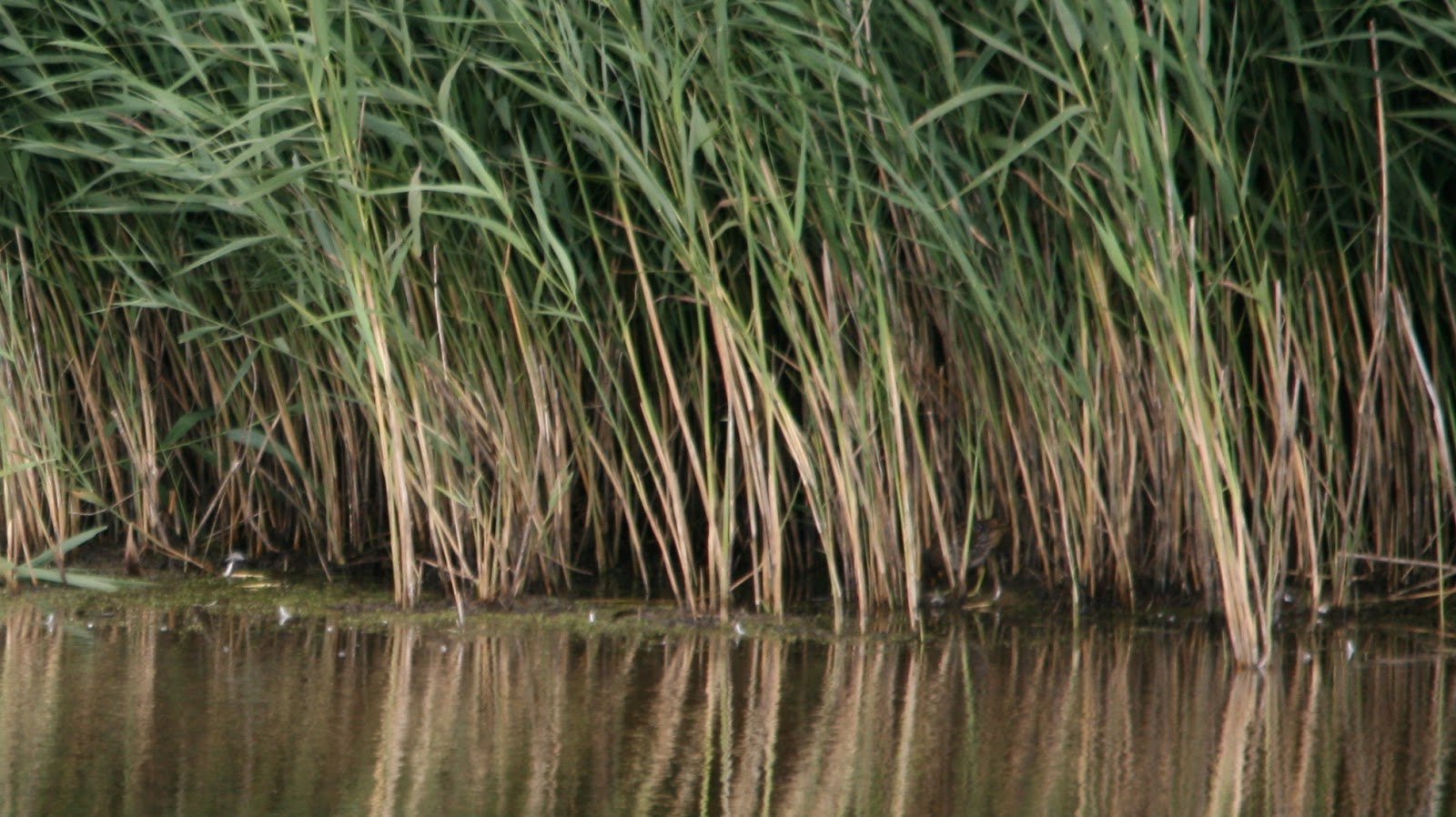
Spot the Crake....

Guess who's had time off!? Me that's who.

I dove down to York to see Matt, but on route I went to Goole. Well near Goole. I headed to Blacktoft RSPB reserve in search of spoonbill and spotted crake... Well, as usual, I dipped on the spatulate white one. But I catch up with the crake, after only 45 minutes watching too. See if you can spot it as well!

Squint a little, its obvious

Too difficult? Try this one....

One closer to 400!


Today I headed over to see the folks at Spurn. I knew there was a wryneck around; more importantly,  there was a spoonbill on the Humber. Driving in I ignored the masses pacing the hedgerows outside Rose Cottage and headed straight for the Warren... but, again, the long legged git had hopped it. Despondent, I went for a wander around the triangle (I'd find my own bloody bird), and as I returned to the car - passing the other birders - the wryneck hopped out into the road in-front of me... I didn't know whether to be smug or annoyed... but I did get this great size comparison. Oh well, maybe I'll get one over the weekend.


Saturday, 27 June 2015

Blyth's Reed Warbler...

So last week Tom (the other blonde birder) and I made ourselves a bet. 400 before 40. That's over ten new birds a year for both of us... So when I saw that the Inverurie Bylth's reed warbler was still showing this morning, I hoped in the car and drove the two hours into Aberdeenshire. 

Arriving at 10:30 I met Jim (a local birder) who had been on site since 8 that morning. He'd met up with folk who'd seen the bird earlier, but hadn't gotten a look in himself. The bird was reeling away in the pines across the river, so we settled in for the long haul. 

After half an hour of staring at nothing we were joined by another couple, and just a few minutes later the bird dropped into view, showing in the bare branches at the bottom of the pine before climbing out of site.

Over the next few hours we were joined by about ten others, all twitching at every hen chaffinch and becoming steadily more angsty... After another 2 hours of nothing, a few of us decided to go grab a quick bit to eat, 25 minutes away, no more. Confident that there would be no good views in the near future, we headed back up the river to the cars. Well, you know what happens now.

On our way back from snacking we pass another birder who had given up and headed for the car. The internationally accepted migrant invite for a good long show. Then, of course, we saw one of the other birders running back along the track. The bird was singing out in the open. After a mad dash along the tow-path I got a slightly longer scoped view on this occasion and that was all she wrote, having only had a half pint of smoothy and a garage sandwich all day I headed for baked brie and cider at home. 

I didn't manage any pictures, so here's one of a poplar hawk moth that was hanging around outside my classroom this week.

This is what happens when your classroom lights are on all night!

Monday, 15 June 2015

Kingussie Icky (or "can you really call it a record shot if you can barely tell what it is?")

On Saturday morning the summer had already buggered off somewhere else. I was restless, annoyed and more than a little damp after the drizzle. I spent the day mooching around Pitlochry and napping on the sofa. I glanced at RBA, saw the report of the Kingussie Icterine, and ignored it. The weather was rubbish. Then at four, the other half of the blonde birders messaged me his (sunny) views of the West Mids melodious warbler, then - adding insult to injury - told me he was off for the black eared wheatear the following day. Well, no way was I missing out.

The next morning was bright and clear and I threw my stuff into the car and boosted north on the A9, rolling into Kingussie at about 10:00. There was no one around as I got out of the car, had it flitted overnight? Well, I'd hardly walked three feet when I met a man walking from the far end of the path. Two minutes of brief conversation later and he was pointing be down the road to where he had seen a crowd of birders the previous day - result.

Armed with local knowledge I positioned myself opposite the likely looking stand of trees, and within a minute had the bird singing away in front of me. Ten minutes later I was joined by a couple of local lads and a guy from Lancashire. and we moved location to get the light behind us. The second spot was more distant but the light was now behind us, the bird glowed a pale yellow standing out even without bins. 

After 30 minutes we moved back to the cars to set up scopes, through which you could easily pick out the heavy bill and the pale patch on the wing. I just couldn't get a decent shot of the bird to save my life. After about 2 hours observation I said goodbye to my new friends and headed up the road.


The tree favoured was just far enough from both vantage points to make pictures bloody awkward

Is that a bit of a primary projection? 

From Kingussie I went to Craigellachie Nature Reserve on the outskirts of Aviemore with the aim of getting some wood warbler shots, but while I heard the birds, I didn't manage to connect with one. However, I did get some lovely views (although again, awful pictures) of flycatchers, common sand, tree pipit and goldcrest. I called it a day at only two, heading back along the A9 to enjoy the last of the sun at home, you never know when it will go again...

Brief views of pied fly resulted in one usable record

The pied flies were more and confiding numerous

Unlike the KD Trips, the Craigellachie birds have more typical habitat and I got to see some lovely branch-strutting